Factor Investing: A Complete Guide to Building Smarter Portfolios
In FY24, smart-beta indices outpaced the Nifty 50 — with low-volatility strategies pulling ahead by as much as 6–12%. Over ₹16,000 crore is now invested in factor-based funds. This approach is no longer fringe — it's a disciplined, research-backed alternative to both active stock-picking and passive indexing. Here is what it is, how it works, and where it honestly belongs in your portfolio.
IN THIS GUIDE:
01. What is factor investing — and why it's gaining momentum now
02. The two families of factors every investor should know
03. Why factor investing works — the structural advantages
04. Where it falls short — limitations to keep in mind
05. Active vs passive vs factor — a direct comparison
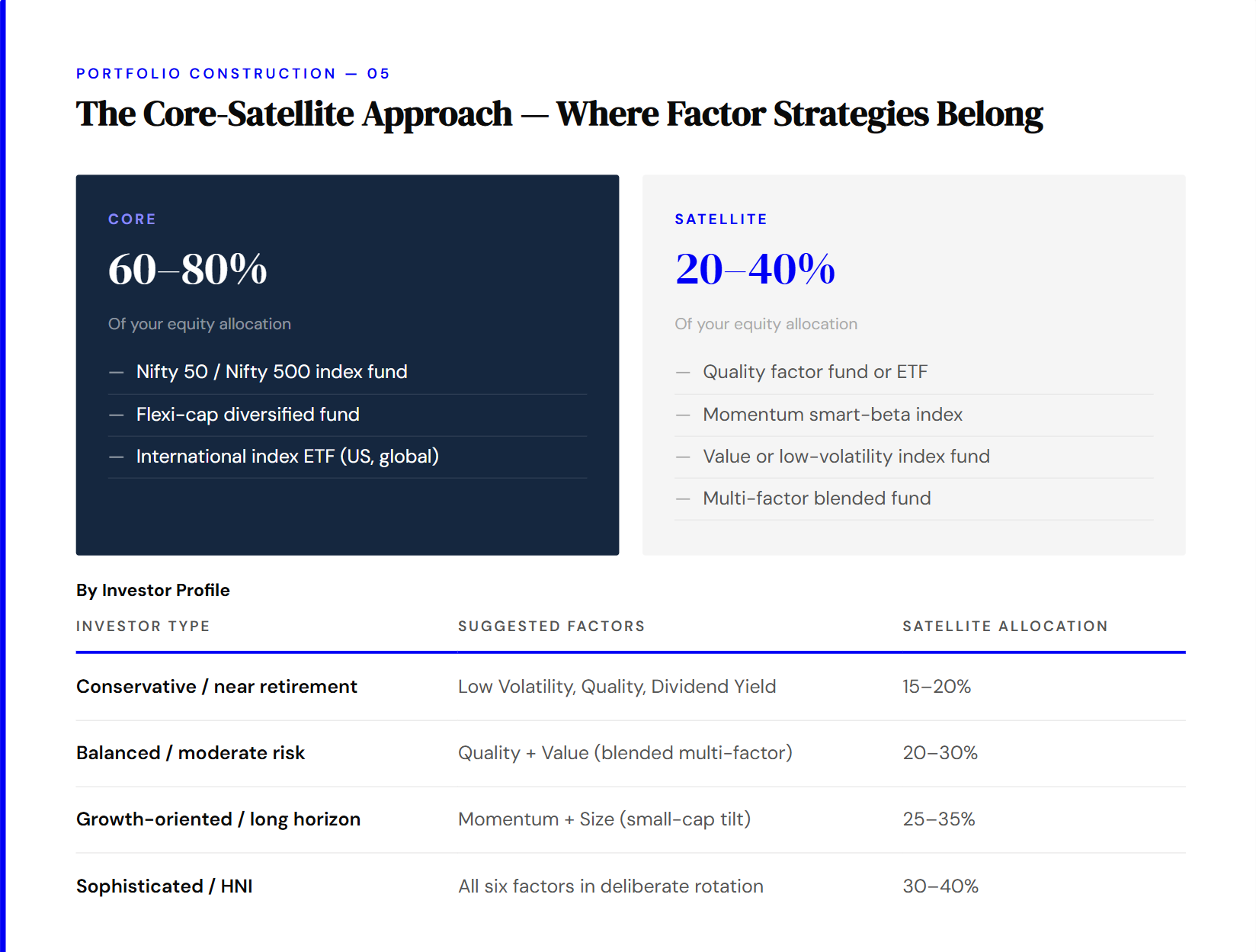
06. How to position factor strategies in your existing portfolio
07. Common questions investors ask
01. What is factor investing — and why it's gaining momentum now
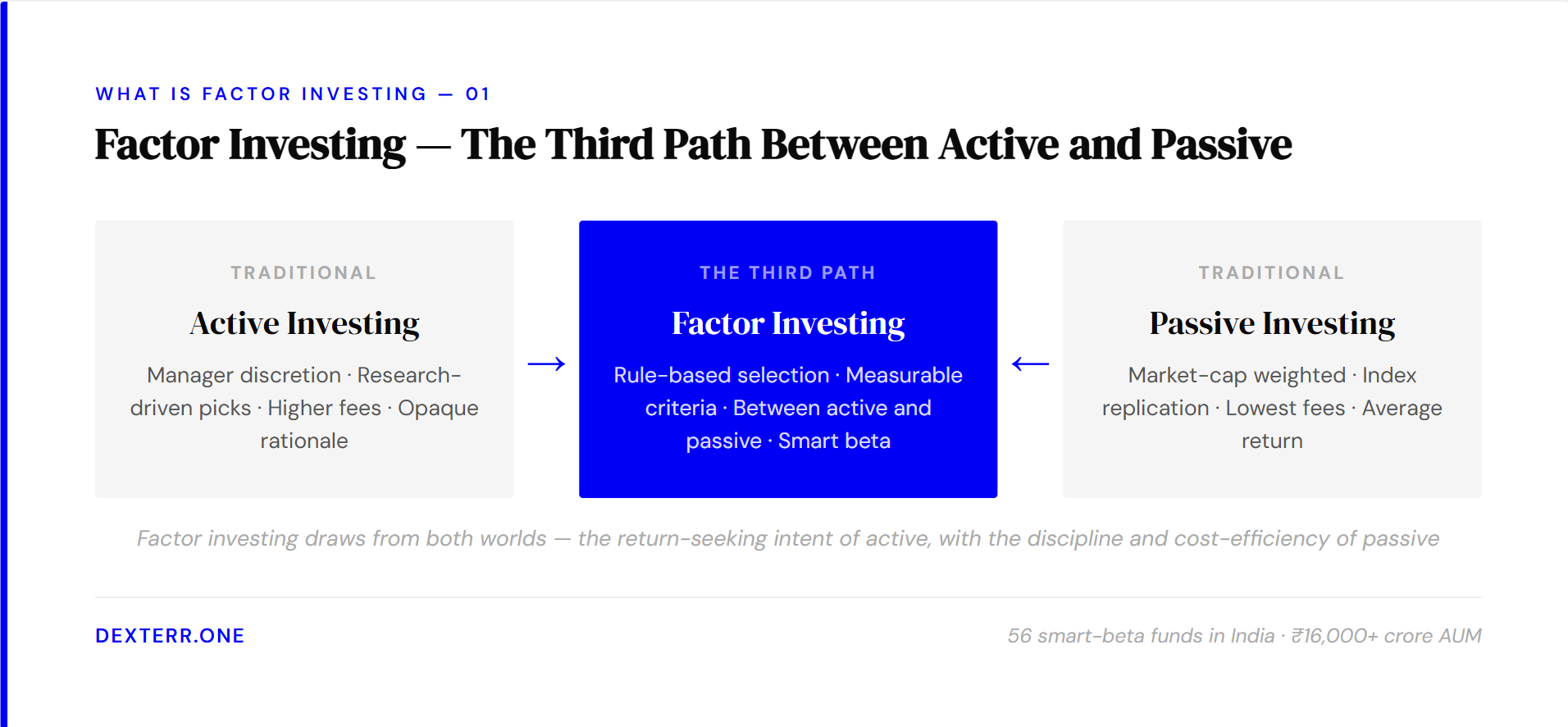
For years, Indian investors faced a familiar binary: hand your money to an active fund manager and pay for their conviction, or put it in a passive index fund and accept the market's average return. Factor investing is a third path —systematic, transparent, and grounded in decades of academic research that most retail investors have never been exposed to.
The idea is simple. Certain stock characteristics — called factors — have historically been associated with outperformance above the broad market. Rather than relying on a manager's gut instinct or market consensus, factor strategies use rules to screen and weight stocks based on these measurable traits. The result is a portfolio more deliberate than a plain index but more disciplined than active stock-picking.
This is what the financial world calls smart beta — and in India, it is growing fast. With 56 smart-beta funds tracking factor indices, the category is now large enough to take seriously.
02. The two families of factors every investor should know
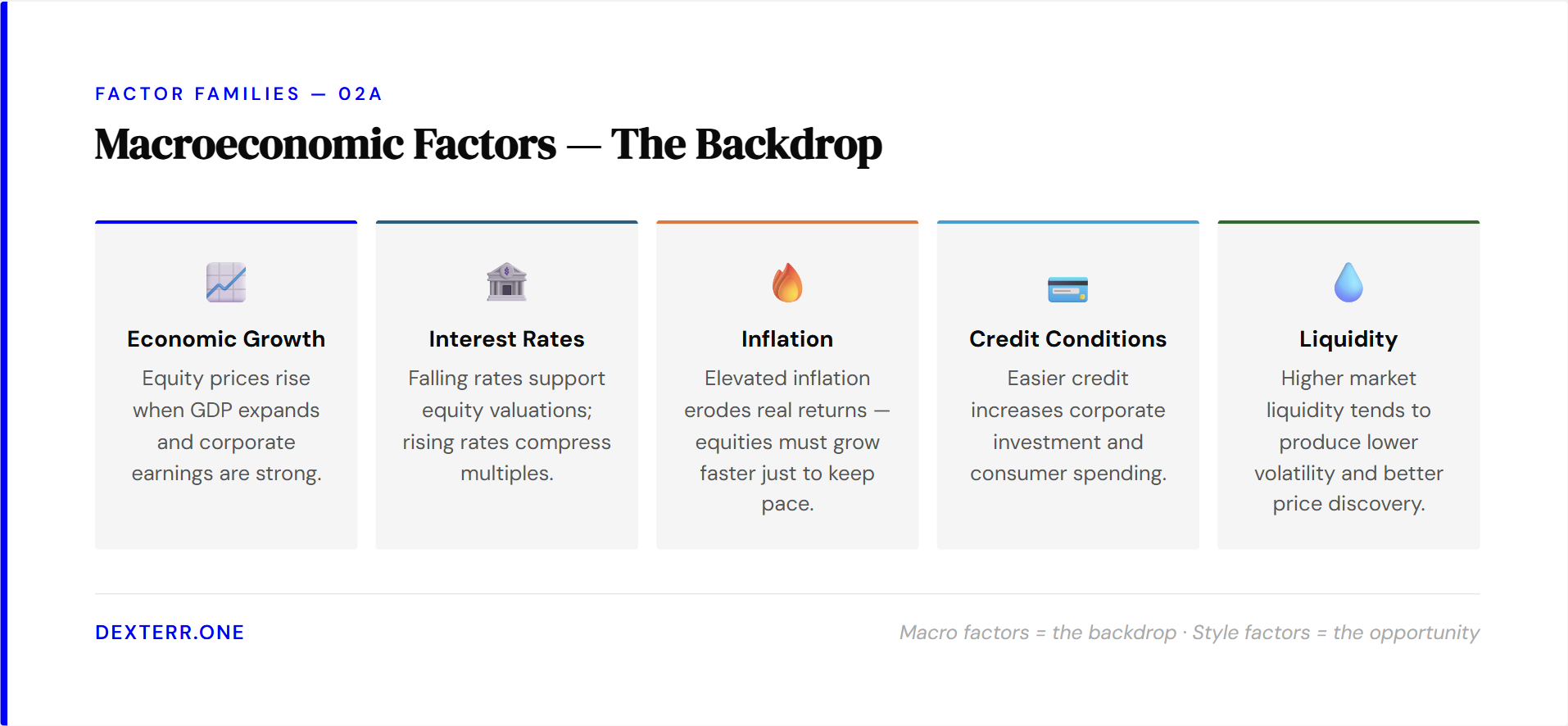
Factors fall into two broad groups: those driven by what is happening in the wider economy (macroeconomic factors), and those rooted in a stock's own observable characteristics (style factors). Most retail investors are familiar with the macro group — GDP growth, interest rates, inflation. The style factors are where the practical factor investing opportunity actually lives.
Macroeconomic factors
These capture broad economic forces that influence entire asset classes. They explain why certain environments favour equities, bonds, or real assets over others. Think of them as the backdrop against which your portfolio plays out — not the script itself.
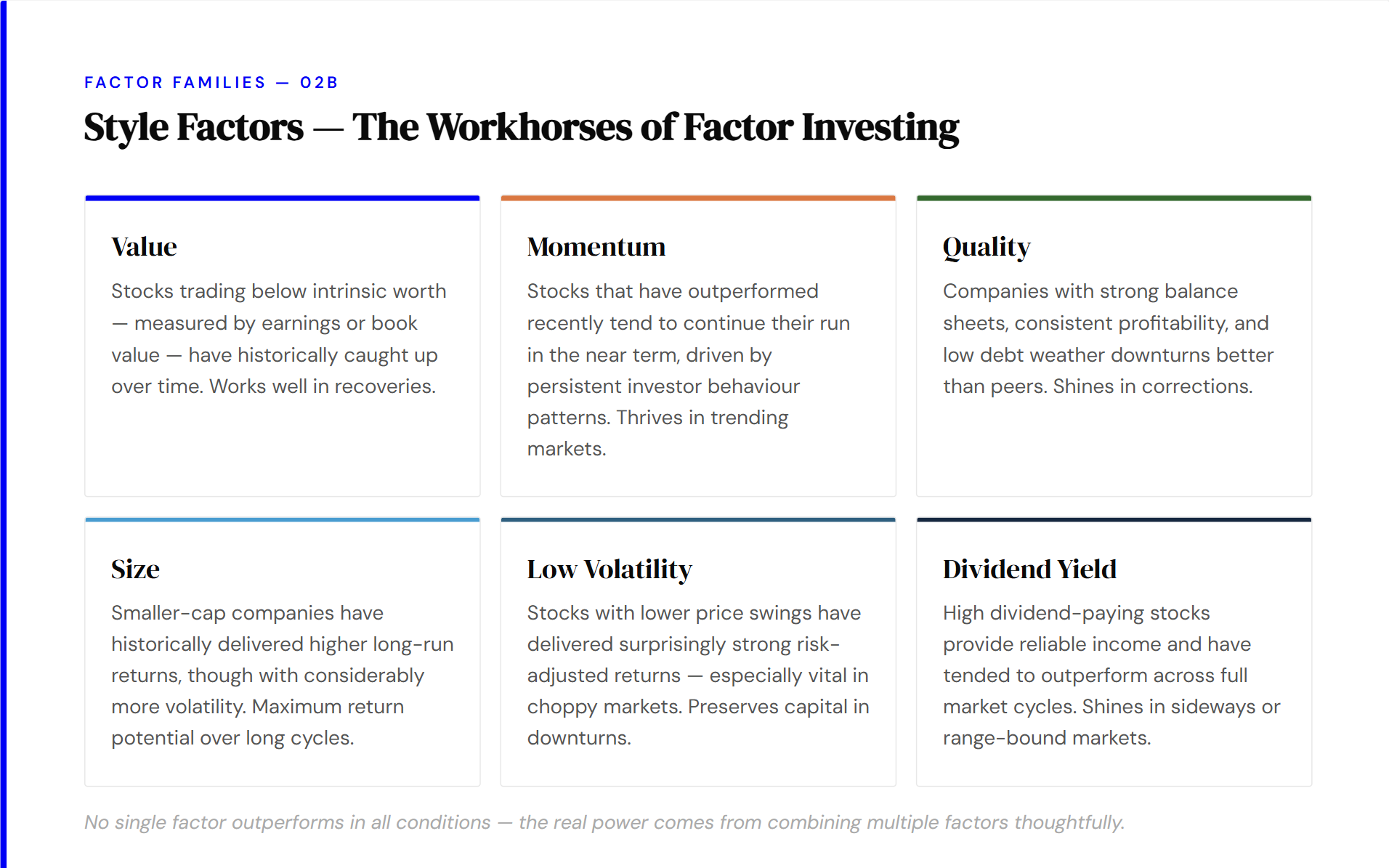
Style factors — the workhorses of factor investing
Style factors are the practical heart of factor investing. Each captures a specific stock characteristic that has been shown — across markets and decades — to be associated with above-average returns or better risk management. No single factor outperforms in all conditions. The real power comes from combining multiple factors, which smooths out the inevitable rough patches each goes through separately.
03. Why factor investing works — the structural advantages
1. A systematic edge over benchmark-hugging
Decades of data show that factors like value and momentum have generated returns above a simple market-cap index. Because factor strategies are rules-based, they avoid the emotional biases that cause active managers to buy high and sell low. The discipline is baked in — not dependent on any individual's conviction, which means it doesn't erode when markets get scary.
2. Transparency you can actually understand
With a traditional active fund, the manager's decision-making is often a black box. Factor strategies tell you exactly what characteristics drive the portfolio. If your value fund underperforms, you can trace it to the factor cycle — not to a manager's undisclosed conviction that turned out to be wrong. This clarity is increasingly valued by sophisticated investors who have grown tired of opaque rationale.
3. Diversification through factor cycling
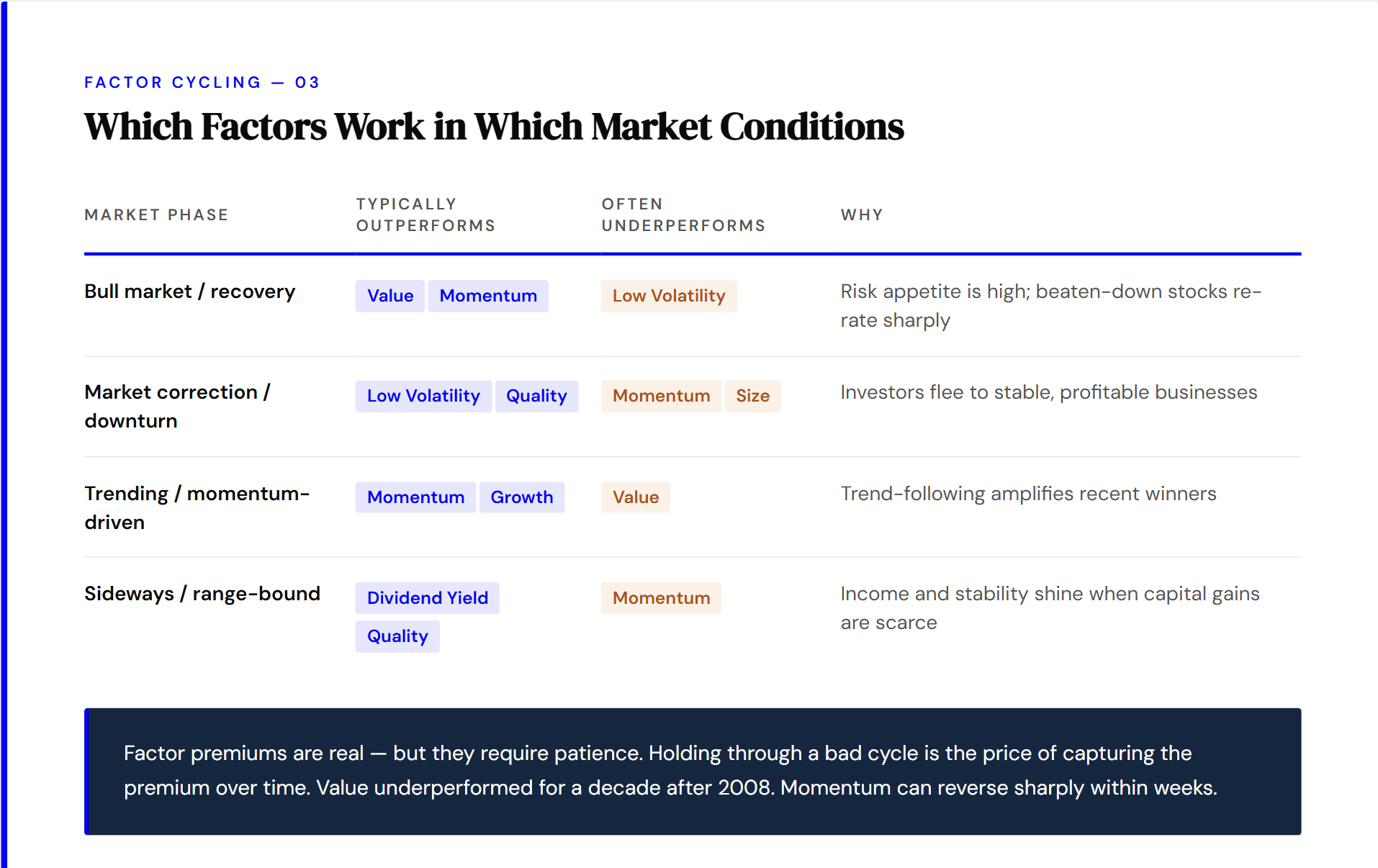
Different factors tend to shine in different market conditions. Value works well in recoveries; low volatility preserves capital in downturns; momentum thrives in trending markets. A multi-factor approach harvests these cycles and reduces the impact of any single factor going through a bad patch.
04. Where factor investing falls short — limitations to keep in mind
Every investment approach has weaknesses. Factor investing is no exception, and being honest about them is the only way to use this tool intelligently. The marketing materials for factor funds tend to emphasise the back-tested returns. The risks deserve equal time.
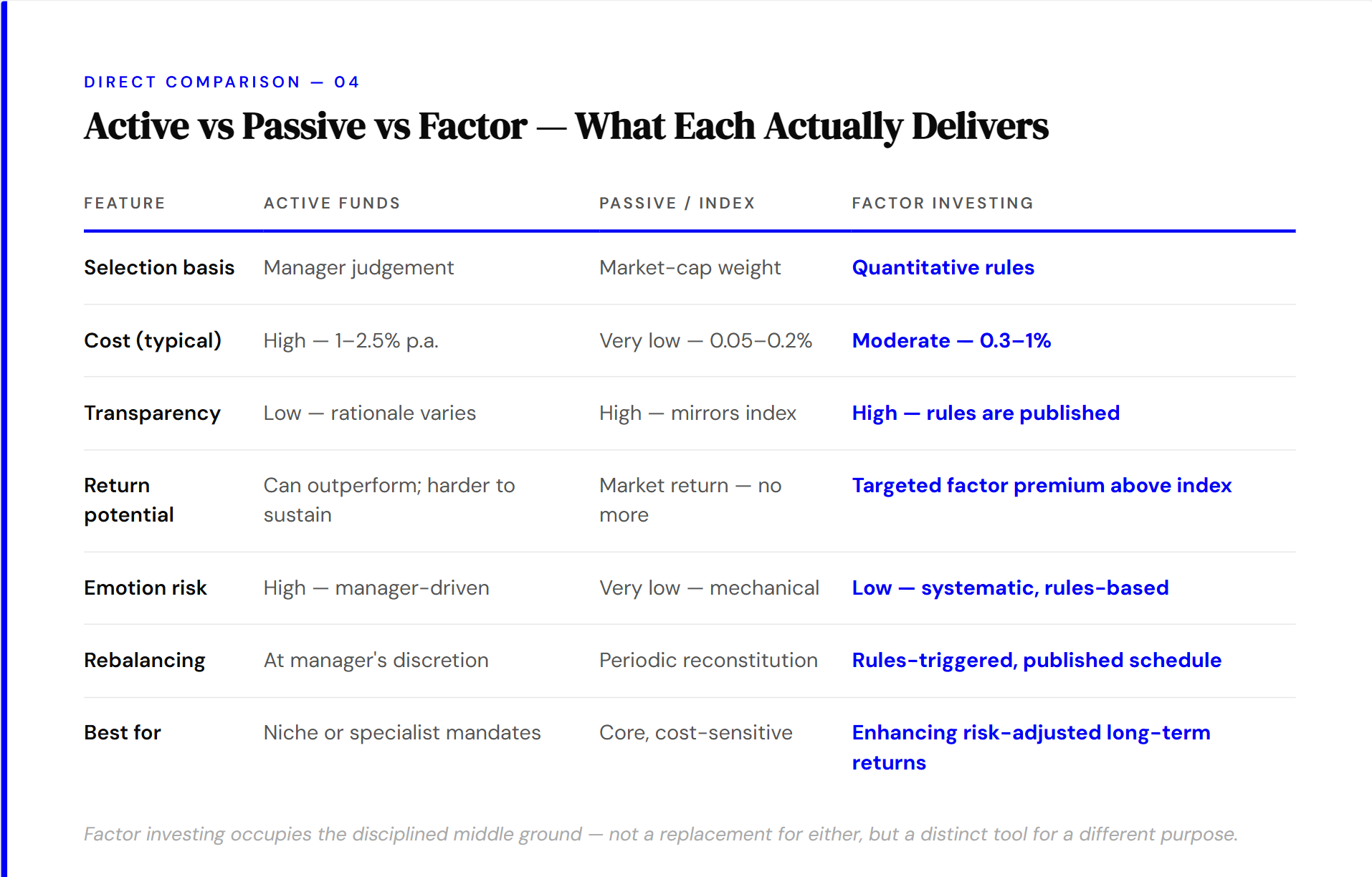
05. Active vs passive vs factor — a direct comparison
Most investors are familiar with the active vs passive debate. Factor investing is a third category entirely — not a replacement for either, but a different tool for a different purpose. The comparison below tries to be honest about what each approach actually delivers, not just what it promises.
Written by:
Revanth Sudish
Arpit Nagda
For suggestions/ feedback, please write to us at: research@dexterr.one
Disclaimer:
This information is for educational purposes only and should not be considered as an investment recommendation. We strongly suggest that you conduct your own research or consult with a qualified financial advisor before making any investment decisions.
Weekly newsletter
No spam. Just the latest releases and tips, interesting articles, and exclusive interviews in your inbox every week.
Thank you! Your submission has been received!
Oops! Something went wrong while submitting the form.